
The agent
What AllChinaBuy does for an order made of many links
Every buying agent does the same four things. The differences are narrower than the marketing suggests, and they matter most in exactly the situation this site is about.

You cannot check out on Taobao, Tmall, 1688 or a Weidian shop with a foreign card and a foreign address. An agent solves that by standing in the middle. Somebody in China receives your request, buys the item, takes delivery of it, looks at it, holds it, and eventually sends it on to you.
AllChinaBuy describes its own service in three stages: selection and purchase, quality inspection and storage, then international delivery. Those three stages are the frame for everything below.
First, the part every agent shares
Worth stating plainly, because it is most of the service and it is where a comparison usually should not be made.

All of them buy on your behalf from the Chinese marketplaces. All of them receive goods into a warehouse. All of them photograph what arrived so you can look before you commit to shipping. All of them hold your items for a while, then let you choose a route and send a consolidated parcel. All of them charge you twice: once for goods, once for the international leg.
If you are choosing your first agent, none of that is a reason to pick one over another. It is the floor, not the differentiator.
Why AllChinaBuy, and what it does differently
Five things we could verify on their own pages. We have deliberately left out anything we could not.

01
It reads most listings for you
AllChinaBuy states that it can capture the details of most listings on the big Chinese marketplaces, so pasting a link usually gives you the real options to choose from rather than a blank form. For a long run that is the difference between picking and retyping.
02
Storage is treated as a feature, not a grace period
Their guidance tells you outright to buy more and send it all together, and gives a free storage window to do it in. Some agents treat holding stock as something they tolerate. Here it is the recommended path.
03
Shipping is quoted as a deposit, then trued up
You pay an estimate based on expected weight, route and destination. The final charge comes from what the carrier actually measures, and the difference goes back to your account balance. On a big consolidated parcel that gap is worth understanding in advance.
04
The self service tools do not need a support ticket
Tracking, chasing a slow order, after sales and balance checks are all published as tools in their help centre, alongside a shipping calculator and a restrictions page you can read before you order anything.
05
Support hours are stated, not implied
They publish service hours in Beijing time and separate addresses for service, marketing and business enquiries. That is a small thing until you are seven hours out of phase with the warehouse and wondering whether anyone is reading.
Be honest
When you should use somebody else
We earn a commission when you sign up through our links. Here is where that would be bad advice anyway.

You already have an account elsewhere with items in the warehouse. Goods sitting in another agent's warehouse cannot be merged into a parcel here. Finish that run before you move.
You are buying one thing, once. Almost none of what this site describes applies. Pick whichever agent your friends use and get on with it.
Your order is heavy or bulky enough to need sea or rail. AllChinaBuy does point you at a customised logistics route for that, but if heavy freight is your normal case rather than your exception, compare properly instead of defaulting.
You need a specific niche marketplace they do not cover. Check their supported platforms first. A guide is no help if the shop you buy from is not on the list.
Where to go next
Read their own guidance first
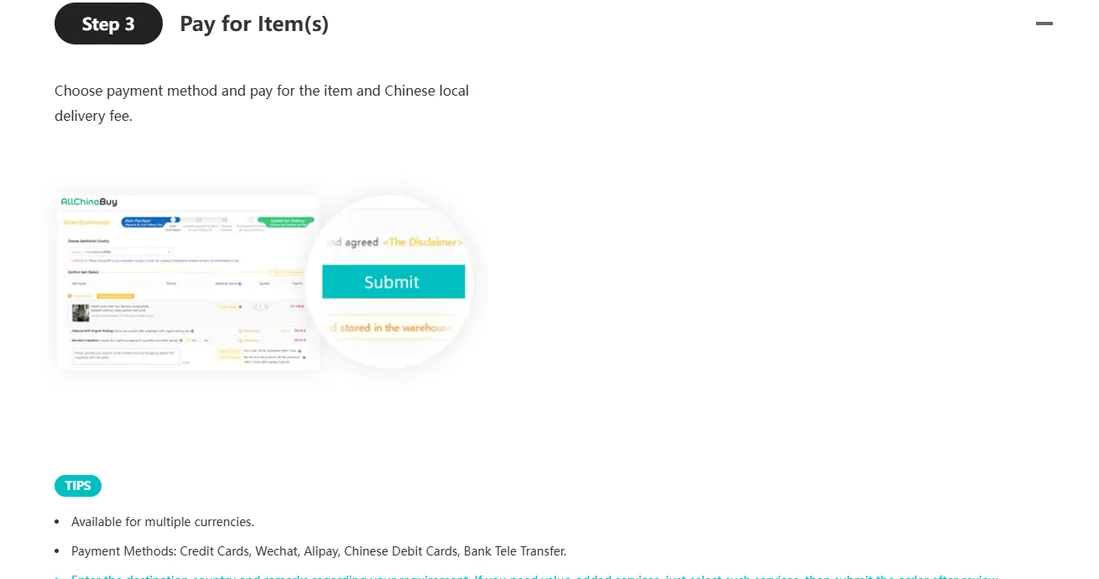
Their user guidance page walks all nine steps with screenshots, and it is the source we checked this page against.
allchinabuy.comAllChinaBuy user guidanceThe official nine step walkthrough, from selecting an item to confirming delivery.Partner link. We earn a commission if you sign up, at no extra cost to you.Or open an account and start
An account is what turns a saved link into an order. Opening one is free and does not commit you to buying anything.
allchinabuy.comCreate an AllChinaBuy accountRegistration on the official site, opened with our partner code.This is the link our commission comes from. It costs you nothing extra.Then come back for the bulk part
Their guidance covers one item well. What it does not do is tell you what changes when there are fifteen.
The spreadsheet
A card, a link, and everything the link is missing
The word puts people off. There is no file to download and no document to open. It is a browsing site made of product cards, and this page is about what one card carries when you hand it to an agent.
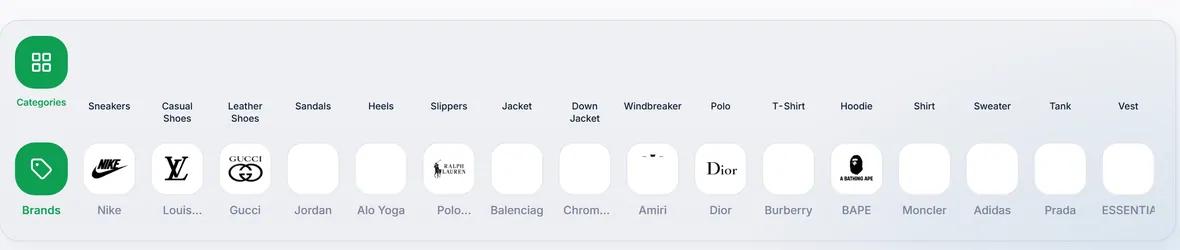
Picture a shop window that never closes and keeps growing. Each item in it has a photo, a name, a price and a link to the seller who actually has it. You scroll, you pick, you copy the link. That is the whole idea.
Calling it a spreadsheet is a habit from the community rather than a description of the format. Nobody maintains a file. What exists is a catalogue you look through.
What one card carries
This is the useful half. A card is generous about some things and silent about others, and the silence is what bites on a long run.
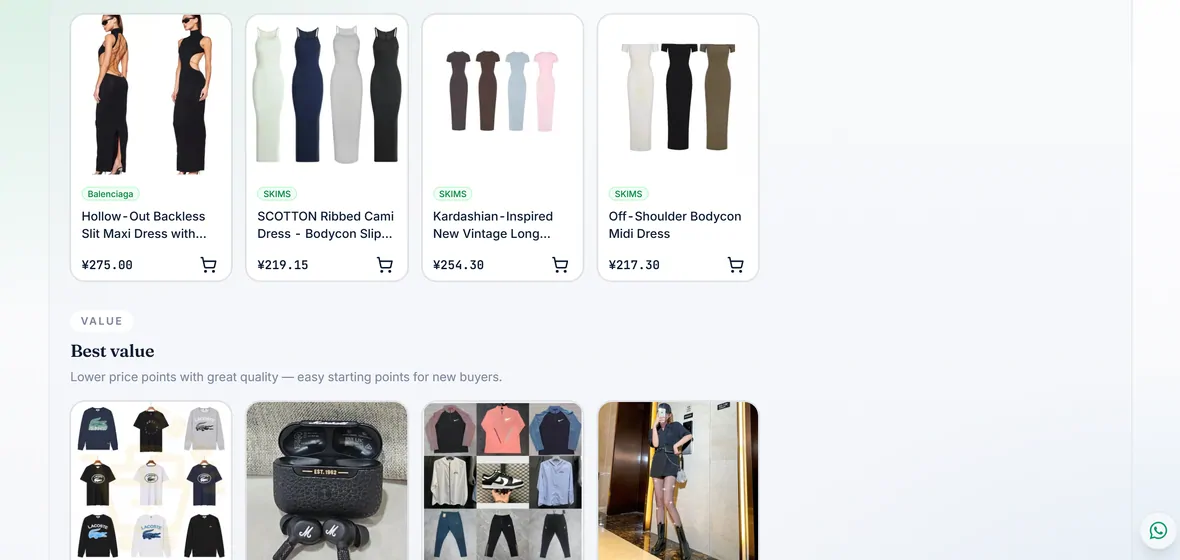
It carries a photograph of the thing, a name in English, a rough price, the brand or collection it belongs to, and a link that resolves to a real seller page.
It does not carry the size you need, the colour option you want, how many you are buying, whether that seller still has stock today, or what the seller calls the variant in their own listing.
None of that is a flaw. A browsing catalogue cannot know your size. It matters here because those four missing pieces are exactly what an agent order form asks for.
- size you choose
- colour option you choose
- quantity you choose
- stock the seller decides
Why use the AllChinaBuy Spreadsheet for a run of many items
Three reasons, in the order they actually matter when you have fifteen tabs open.

01
The searching is already done
Finding a specific item on a Chinese marketplace, in Chinese, through a search box that ranks by things you cannot read, is the slowest part of the whole process. Browsing cards skips it. For one item that is a convenience. For fifteen it is the difference between an afternoon and a week.
02
Categories keep a run coherent
Because the catalogue is grouped, you tend to build a run out of related things rather than whatever you stumbled across. That has a practical benefit later: a parcel of similar goods behaves more predictably at the shipping stage than a mixed one.
03
The link is the handoff
Everything about the agent side of this process starts with a link. A catalogue that ends every card in one is built for the handoff, which is why the two sites are used together rather than as alternatives.
The distinction people get wrong
The catalogue does not buy anything, hold anything, or ship anything. AllChinaBuy does not help you find anything. If you are waiting for one of them to do the other's job, you will wait a long time. The handoff between them is here.
Start browsing
By category
Fifteen categories with a note on how each behaves when it shares a parcel.
How it works
From a folder of links to one parcel
The sequence below is AllChinaBuy's own, with the parts that behave differently at fifteen items marked. Nothing here is a workaround. It is the normal path, read with a longer list in hand.
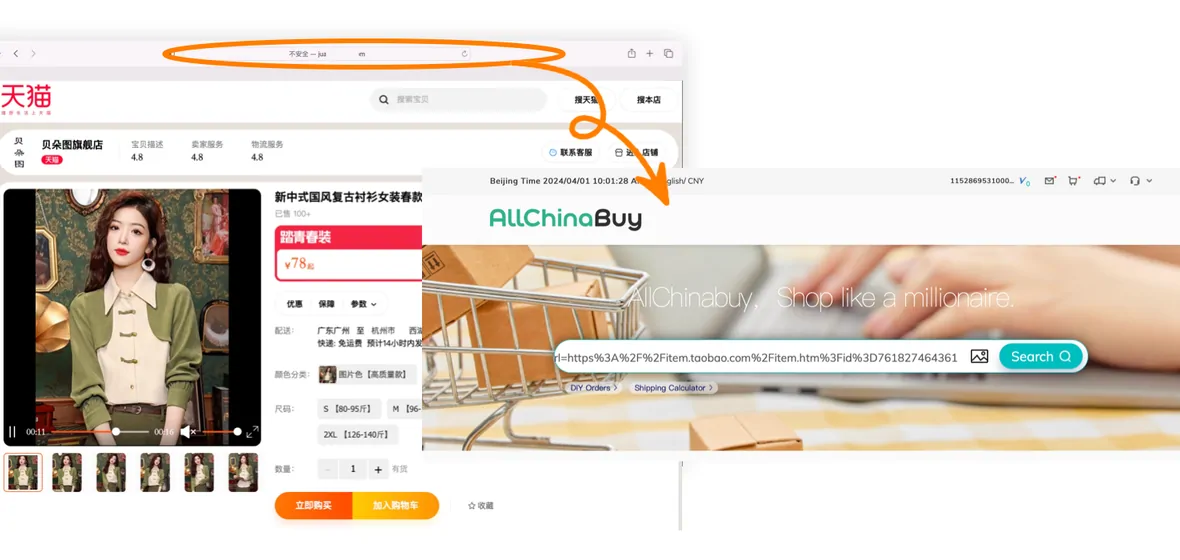
The nine steps, read for bulk
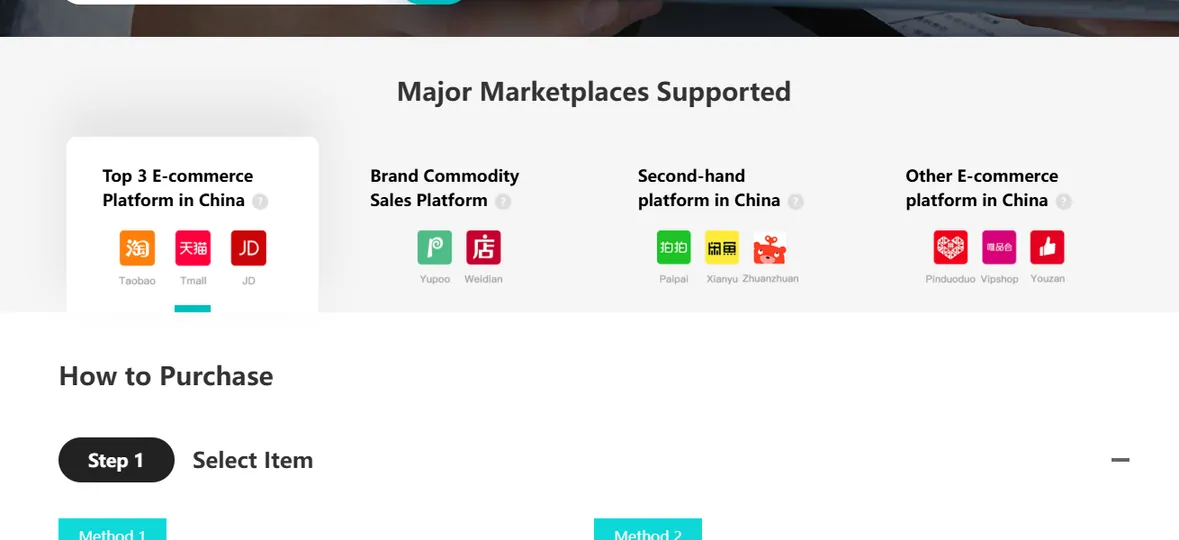
Collect the links, then stop collecting
A run needs a boundary. Every link added after you start ordering resets the clock on the whole parcel, because the warehouse can only send what has arrived. Decide the list is closed, then begin.
Hand each link over, one at a time
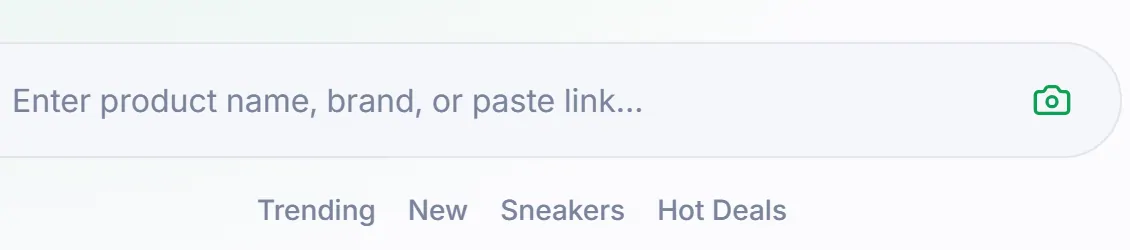
You paste a product link into AllChinaBuy's search bar, or type a product name and pick from what it suggests. There is no bulk import. Items collect in the cart, which is what eventually lets one run become one set of orders.
Choose the options, or retype them
AllChinaBuy says it can read the details of most listings on the big marketplaces, in which case you pick colour, size and quantity directly. When it cannot, a form appears and you fill the order in by hand. This is the single most important fork on this page.
Pay for the goods and the Chinese leg
The first payment covers the items and their domestic delivery to the warehouse. You choose a destination country and add remarks here. Value added services offered at this stage are about the goods, not about the parcel that does not exist yet.
Wait, and watch things arrive separately
Buyers order from each seller, and each seller ships to the warehouse on their own schedule. Items appear in your warehouse view as they land. Inspection happens here, with photos, and AllChinaBuy says it will contact you if something is wrong.
Decide the run is complete
This is a decision, not an event. You can send what has arrived and leave the rest, or wait. AllChinaBuy provides free storage for a stated window and recommends consolidating, so waiting is a supported choice. Check their storage page for the current window.
Select items and submit a parcel
In the warehouse view you tick what goes in the box, fill in delivery details and choose a delivery type. Packing requests belong here: removing boxes, reinforcing the package, insurance. Some items restrict which delivery types are offered, which is why the mix matters.
Pay the shipping deposit
The second payment is an estimate based on expected weight, the route you chose and where it is going. The final figure comes from the size and weight the carrier verifies, and the difference returns to your account balance afterwards.
Track one parcel instead of twenty orders
Once it ships, the run becomes a single tracking number. This is the payoff, and it is also the point at which nothing about the contents can be changed.
The fork
When the automatic capture does not work
Step three splits in two, and the second branch is where long runs lose information. It is worth understanding before it happens to you at item eleven.
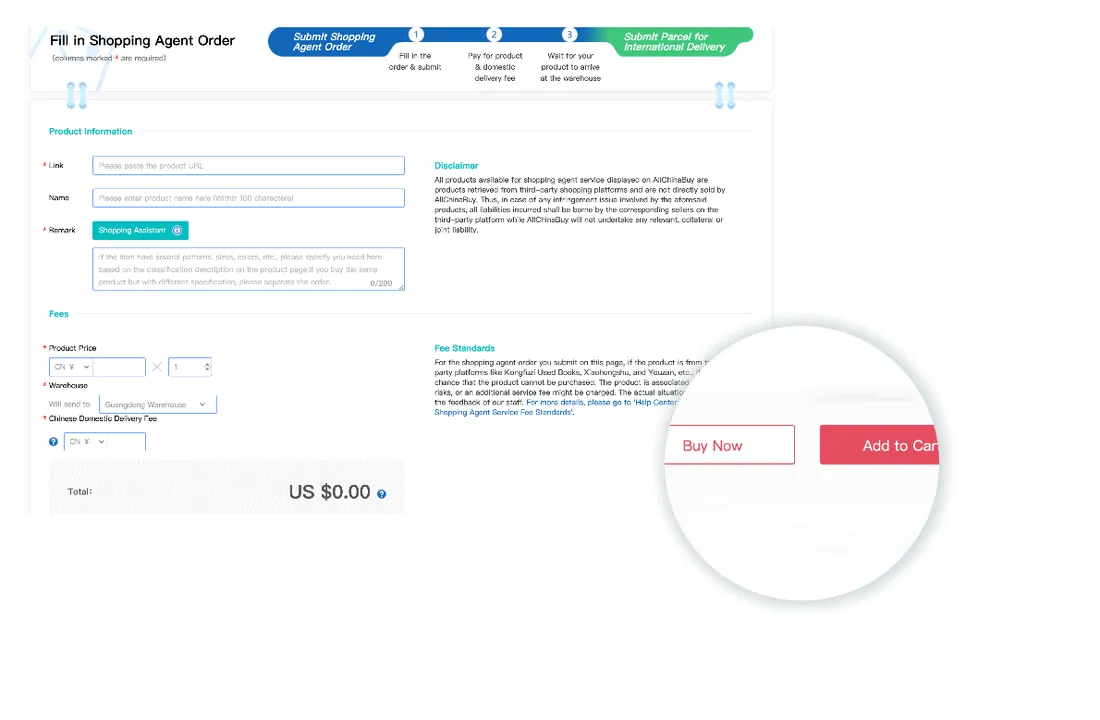
On the good branch, AllChinaBuy has read the listing and you select from the seller's real options. Whatever you pick is what the buyer acts on, and the options came from the page itself.
On the manual branch, you become the source. You type what you believe the listing says. Nobody downstream compares your typing to the original page, because nobody downstream has the original page.
Neither branch is broken. The asymmetry is that the first one is self correcting and the second one is not, and at item eleven of fifteen you are much less careful than you were at item one.
Use the attribute check to fix the three fields before you start
The two payments, and why the second one moves
The split does not change with the size of the run. What changes is how far apart the two payments sit and how much the second one can drift.
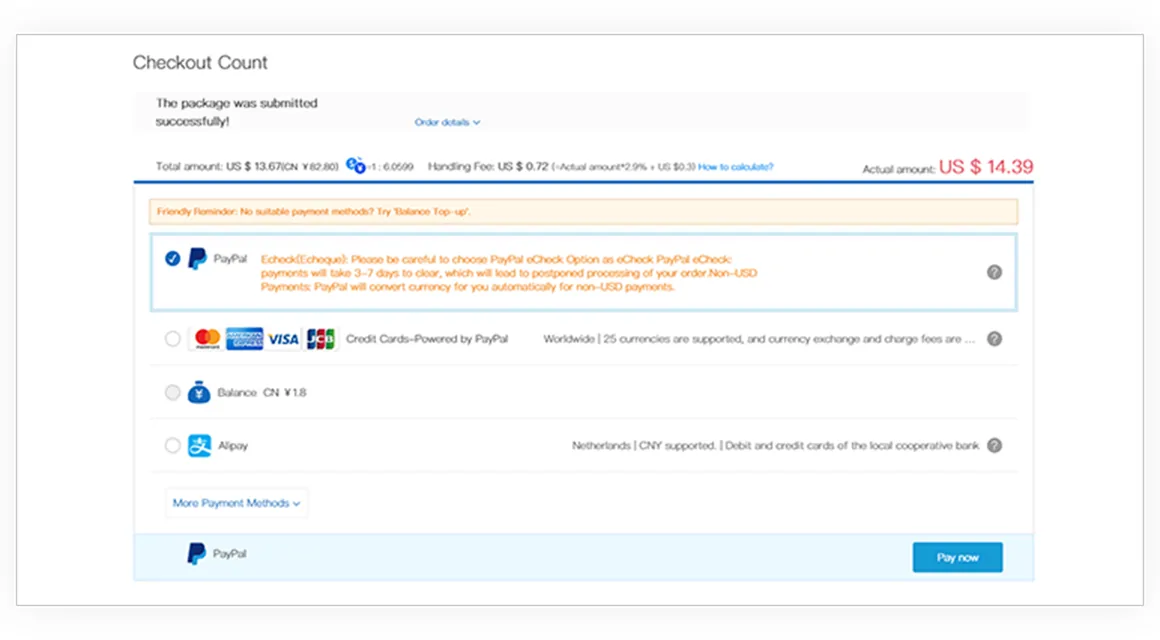
Payment one happens per order: the goods plus their Chinese domestic delivery. On a fifteen item run this is fifteen small payments spread over however long the ordering takes, not one lump.
Payment two happens once, at the parcel. It is a deposit calculated from estimated weight, chosen delivery type and destination. AllChinaBuy states that the final charge is worked out from the size and weight verified by the shipping company, and that any difference is returned to your account.
Consolidation is the reason to accept that uncertainty. One parcel of fifteen items almost always beats fifteen parcels, which is the comparison worth making rather than deposit against final.
allchinabuy.comShipping calculator and its FAQEnter a weight and dimensions to see routes and estimated charges, plus their own notes on weight limits, volume weight and restricted goods.Partner link. We earn a commission if you sign up, at no extra cost to you.The convergence point
Everything in this guide is really about one screen: the warehouse view where separate arrivals stop being separate.
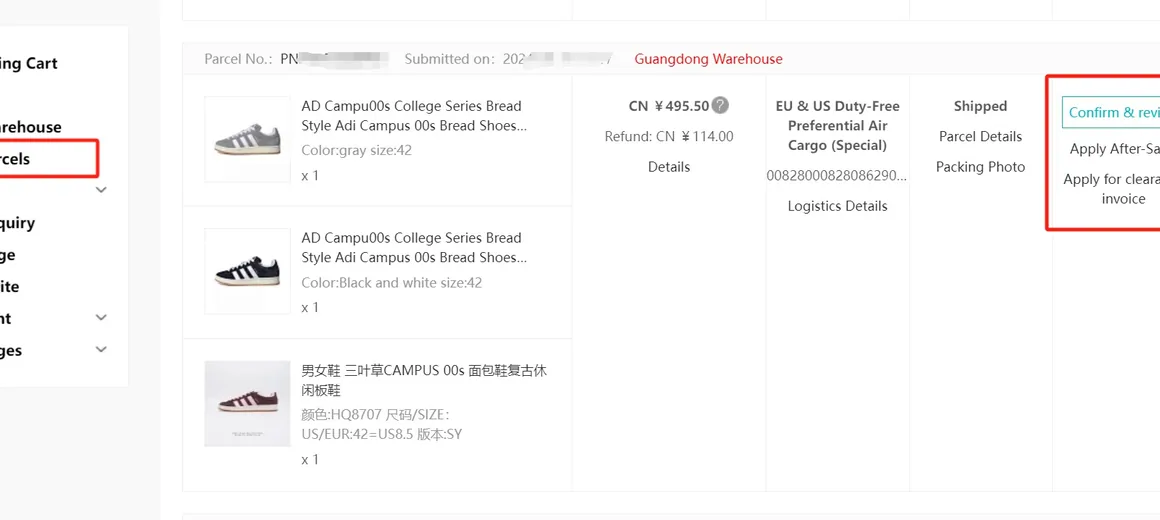
Before this screen you have orders. After it you have a parcel. The change is not cosmetic: after sales, clearance paperwork and tracking all attach to the parcel, while inspection photos and order problems attach to the individual items.
That is why the ordering decisions are worth getting right early. Once the box exists, the questions you can ask about it are different questions.